Consultancy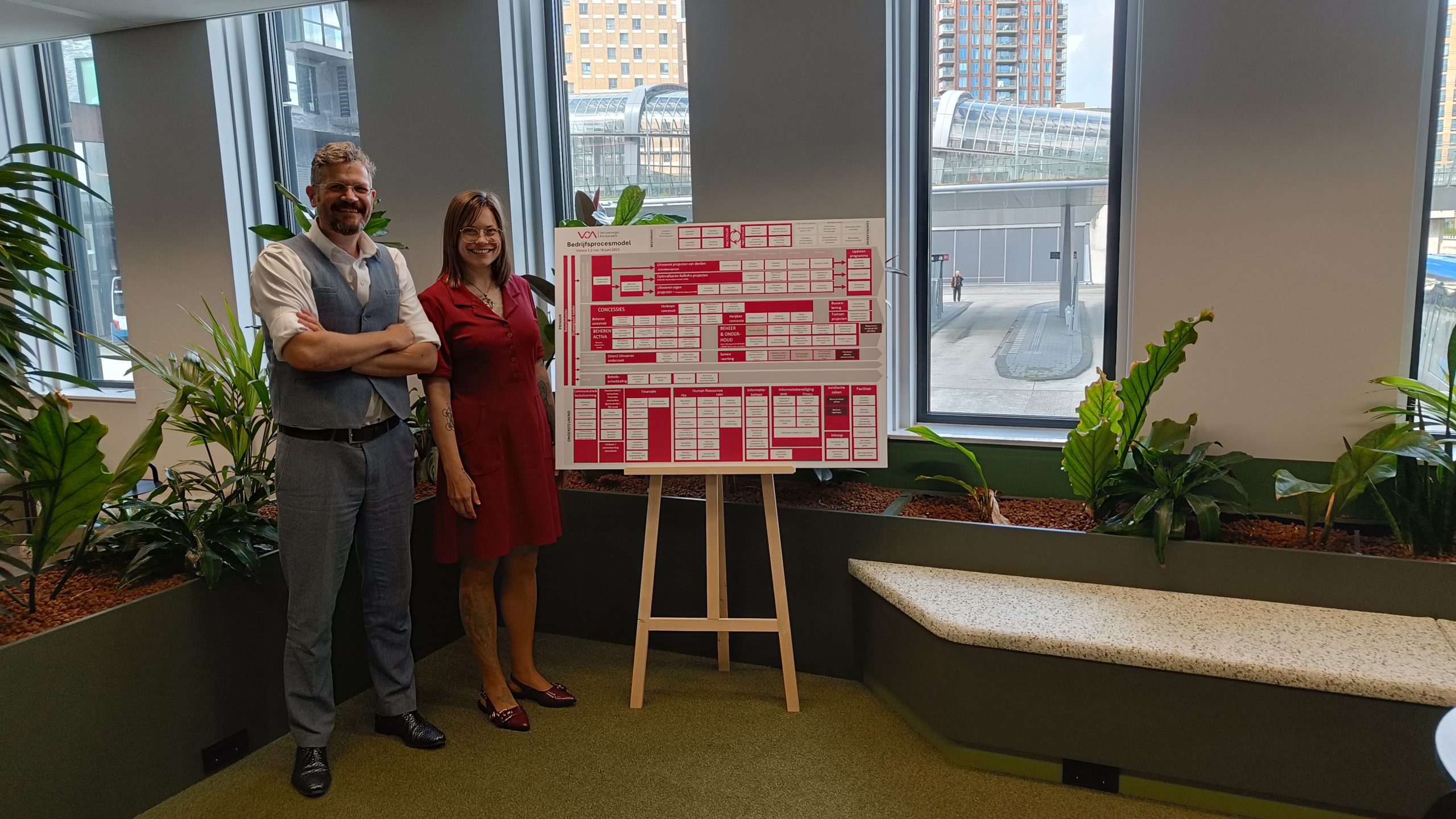

Due to the growing demand for mobility and the expansion of its responsibilities, the Amsterdam Transport Authority has grown considerably in recent years. As a result, the organisation has become more complex. This growth created a need for greater insight into work processes, improved coordination between teams, and stronger control over the internal organisation. Together with BPM Consult, efforts have been made to realise this ambition.
The Amsterdam Transport Authority works to improve accessibility, sustainability, safety, inclusivity, and public health in the Amsterdam region. It does so, among other things, by granting public transport concessions, delivering projects to enhance mobility and infrastructure, and promoting research and collaboration within the sector.
The need for change
To effectively respond to the many developments and challenges in the market, the Amsterdam Transport Authority is working towards becoming an organisation that designs its business processes efficiently and effectively, supported by a structured framework that enables these processes to be properly managed and improved.
In collaboration with BPM Consult, efforts have been made to establish effective process management within the organisation. A key starting point in this work is the need for a central, standardised digital environment in which all processes and related information are clearly documented and managed.
In addition, there is a clear ambition to support employees in designing, improving and standardising processes. There is a need for a way of working that helps teams to actively reflect on opportunities for improvement and to translate these in a structured manner into concrete actions and implementation.
At the same time, the needs of management play an important role. In order to provide direction to an increasingly complex organisation, it is essential that managers have access to the right information and insights. Process management must therefore equip them with the means to make well-founded decisions and maintain control over execution.
With this objective, the Amsterdam Transport Authority is taking an important step towards its vision of the future: an organisation in which processes are not only transparent, but also consistently and controllably documented, where teams take ownership of continuous improvement, and where management has the right insights to shape the future.
The approach
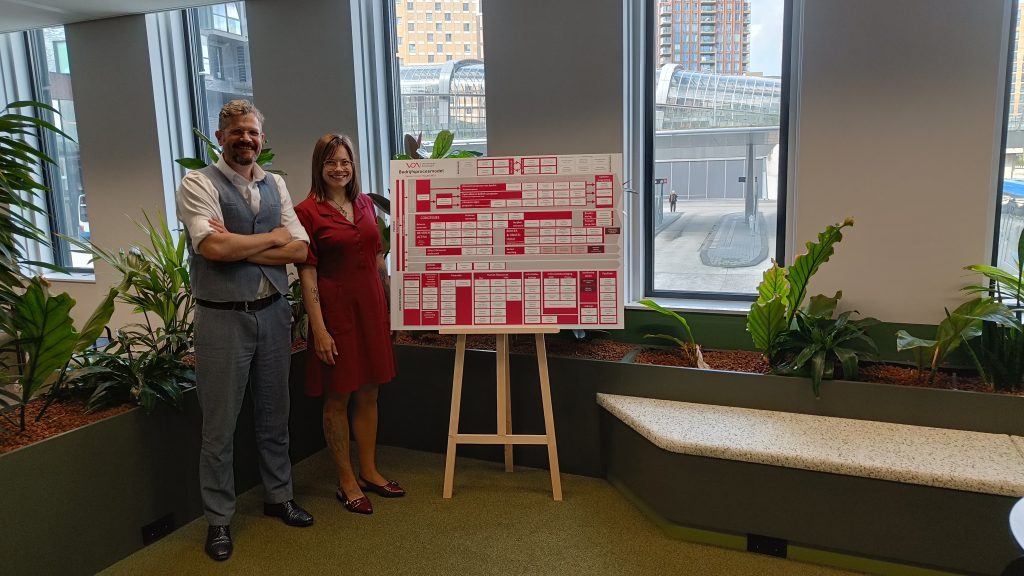
A key foundation for process-oriented thinking and working is clarity in roles and responsibilities. The Amsterdam Transport Authority is organised into specialist departments, but this made it difficult to maintain an overview of end-to-end processes. Therefore, the first step was to develop an overarching business process model in which all processes within the organisation were identified. This ultimately resulted in over 130 processes.
Mapping, reviewing and approving such a large number of processes is a significant and time-consuming task. For that reason, the initial focus was on processes with high strategic priority, based on the top 20 risks, regulatory frameworks and operational challenges, such as the replacement of a core application. Within one year, roughly half of the processes were mapped and reviewed, always in close collaboration with representatives of the process practitioners.
Designing and reviewing processes alone does not lead to sustainable change. Therefore, work was carried out in parallel to define and establish clear roles and responsibilities within process management. Ultimately, overall accountability for clusters of processes was assigned to a member of the management team (the ‘cluster owner’), and a subject matter expert was appointed for each individual process to oversee it (the ‘process owner’).
To ensure that processes are accessible to everyone, a structured SharePoint environment was also developed through which all employees can easily navigate to find process information.
A final step in the approach was to gain practical experience in working with a structured improvement method. Once the Amsterdam Transport Authority has standardised processes in place, this provides a strong foundation for continuous improvement. Building on the PDCA cycle and techniques from Scrum and Agile, eight working sessions were held, covering everything from analysing the current way of working to celebrating successful change.
Results and impact
The introduction of effective process management within the Amsterdam Transport Authority has led to improvements for both the organisation and the traveller:
For the organisation
A key finding from the start of the project was that departmental thinking meant employees had limited visibility of what the organisation as a whole does. Process management has created an initial awareness of the importance of process-oriented working.
During the design sessions, it frequently became clear that employees tend to think from within their own specialism and department, rather than across the entire flow of activities. Creating mutual understanding and identifying this flow provides a solid foundation for targeted improvement. Employees have been introduced to process thinking and to jointly analysing the full flow of activities. This has led to greater mutual understanding, improved information exchange and increased knowledge sharing between departments, an important step in breaking down silos.
What makes this approach distinctive for the Amsterdam Transport Authority is that it is not purely theoretical, but closely aligned with day-to-day practice, taking into account the organisation’s flexibility and needs. By working together with employees and managers to develop a way of working that reflects daily reality, process-oriented working has not remained an abstract concept, but has become a recognisable and practical way of collaborating.
As the process manager describes it, “Process management offers countless tools to make a significant difference through small steps. By sensing what the organisation needed and applying these tools in a unique, flexible approach, we have achieved lasting results as well as a new way of thinking.”
To further embed this approach, specific process management roles have been defined, such as the cluster owner, process owner, process manager and the employee responsible for executing and improving the process. This has led to increased attention to both the management and improvement of processes. What started as a project-based approach has now become a more integrated part of the organisation, laying a sustainable foundation for further professionalisation..
Initial steps have also been taken in the area of continuous improvement. In a pilot involving one improvement team, a structured improvement approach was tested. This pilot demonstrated that improvement efforts can generate energy and contribute to achieving shared goals.
At the same time, awareness has grown that improvement does not happen automatically. It requires ownership, structure and dedicated time, for example by setting aside uninterrupted working periods. The pilot has created momentum, and the expectation is that the process manager will continue and further roll out this approach independently across the organisation in the future.
For the traveller
Although the changes so far have mainly been internally focused, there is a clear ambition within the Amsterdam Transport Authority to also create impact for the traveller. By designing processes carefully and involving the right stakeholders, mobility policy is better able to guide the selection of projects that contribute most to accessibility, sustainability and inclusivity.
The management of concessions has also been improved. By creating clarity around how processes operate and where bottlenecks occur, greater control over execution has been achieved. This makes it possible to establish better agreements and to adjust more quickly where necessary.
At present, these effects are not yet directly noticeable for the traveller, but there is a strong awareness within the organisation that well-structured processes are a prerequisite for ultimately delivering that impact.