Consultancy

Urgency driven by new-build development
Sutfene, a healthcare organisation, was facing a far-reaching transformation. The ambition to develop new housing for psychogeriatric care led to a broader reconsideration of the organisation. Plans had been in place since 1996, but real urgency only arose once construction actually began. The new location on Coehoornsingel in Zutphen provided an opportunity to redesign living, care and wellbeing in an integrated way. This marked the start of an organisation-wide transformation programme.
The new building made it clear that the organisation itself also needed to change. Sutfene wanted to move away from the traditional residential care model and focus on independent living. This required a shift in mindset among both staff and residents. The key challenge was to involve employees in the change process and to build support for new ways of working across all locations. In particular, the transition from institutional to community-based thinking required intensive guidance.
Structure and engagement
The ‘New Build of the Organisation’ project began with a blueprint based on the INK model. BPM Consult supported the process with templates and building blocks, while actively involving staff. Project groups were given the flexibility, via a voucher system, to engage consultants for specific phases. This approach ensured both consistency and a strong sense of ownership within the organisation. The structure allowed for tailored solutions per product group without losing overall coherence.
In addition to a steering committee, several project groups were established. BPM Consult’s consultants supported the project leaders without dominating the content. Staff were given the space to shape process designs for each product group themselves. The templates ensured consistency in the level of detail and output. The transition to the new organisation will take several years, with ongoing staff involvement. Over time, BPM Consult’s role shifted from leading to facilitating.
Draagvlak en ontwerp
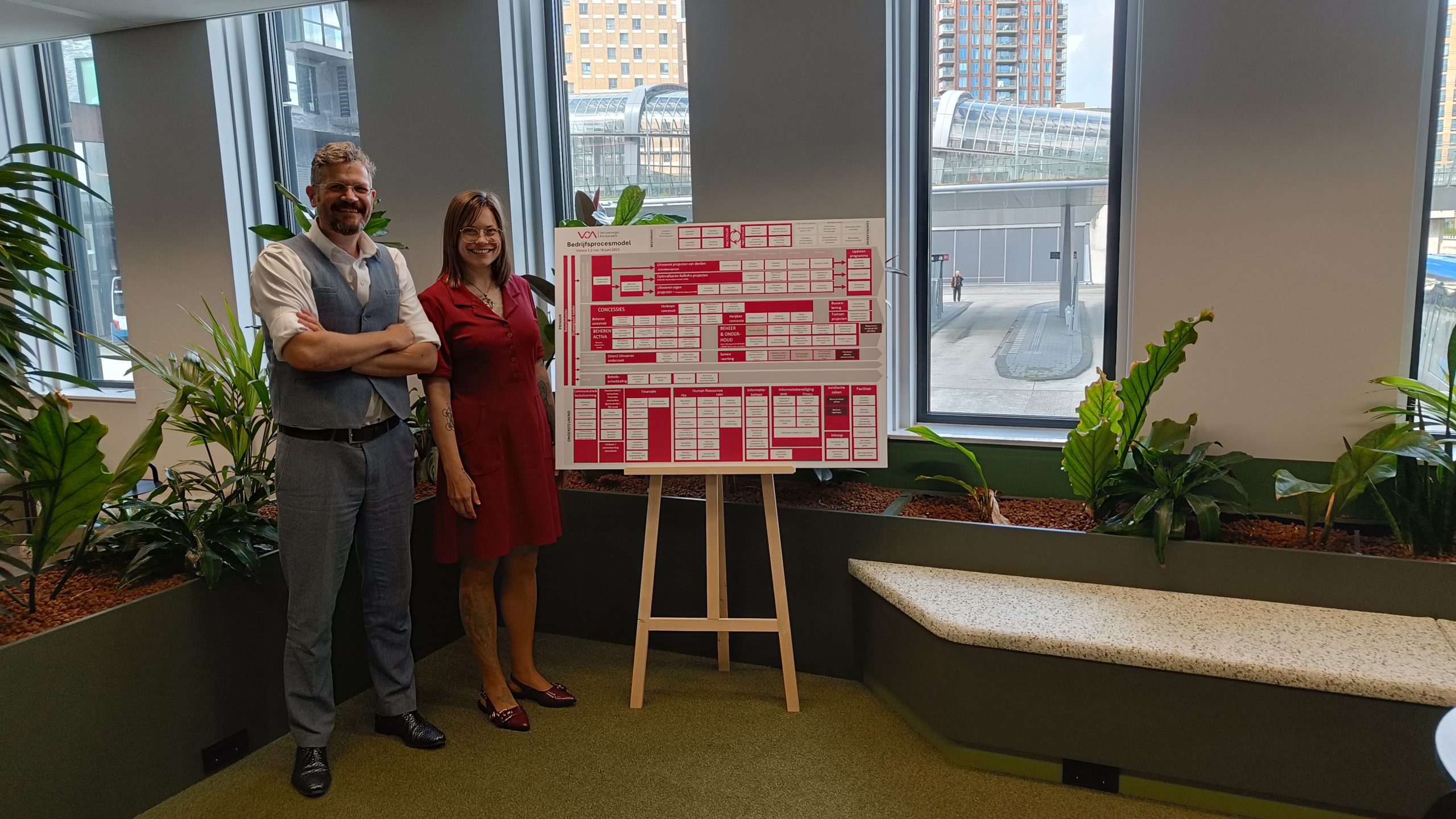
Handbooks have been developed containing process designs for each product group. Employees show strong support for the new way of working. External locations have also been included in the project, strengthening overall cohesion. Rick Hogenboom said, “The most powerful aspect of the entire process is the discussion about what exactly constitutes the organisation’s primary process.” This discussion led to greater clarity and increased engagement in shaping both core and supporting processes.
A quarter of the staff attended employee council meetings. The atmosphere was positive and engaged. The project approach proved effective, keeping the initiative manageable and clear. The final phase, implementation, is now approaching. The organisation has been energised and is ready for a generic approach with room for differentiation. The strong involvement of employees has resulted in enthusiasm and a sense of ownership at all levels of the organisation.
Scope for ownership
The project has reinforced the awareness that change must come from within. Employees in the core processes were given the space to redesign processes more intelligently themselves. This autonomy is being maintained. Teams take responsibility, supported by a growing middle management layer that has learned that change starts with employees. The challenge now lies in facilitating this development without reverting to top-down control.
The collaboration with BPM Consult is seen as highly valuable. The combination of hard and soft consulting made the difference. Sutfene now has not only new facilities but also a renewed organisation. Information systems are only implemented once there is clarity about the organisation’s direction. Systems follow the processes, not the other way around. This project has laid a solid foundation for future-oriented care delivery.