Consultancy

Background
The Utrecht Regional Environmental Service (ODRU) supports fifteen municipalities with environmental and spatial planning tasks. Following a merger in 2012, the organisation grew in size and complexity. This created a need to standardise processes and work more efficiently. Municipalities explicitly requested greater attention to efficiency, which became the catalyst for a programme focused on process-oriented working, carried out in collaboration with BPM Consult.
ODRU wanted to move away from fifteen different ways of working for similar tasks. An initial internal effort was made, but it soon became clear that external expertise was required. BPM Consult was engaged to take a more decisive approach to the programme. Alongside process improvement, ODRU also launched projects for product development and the simplification of time recording. These initiatives proved to be closely interconnected and were aligned accordingly.
Coherence
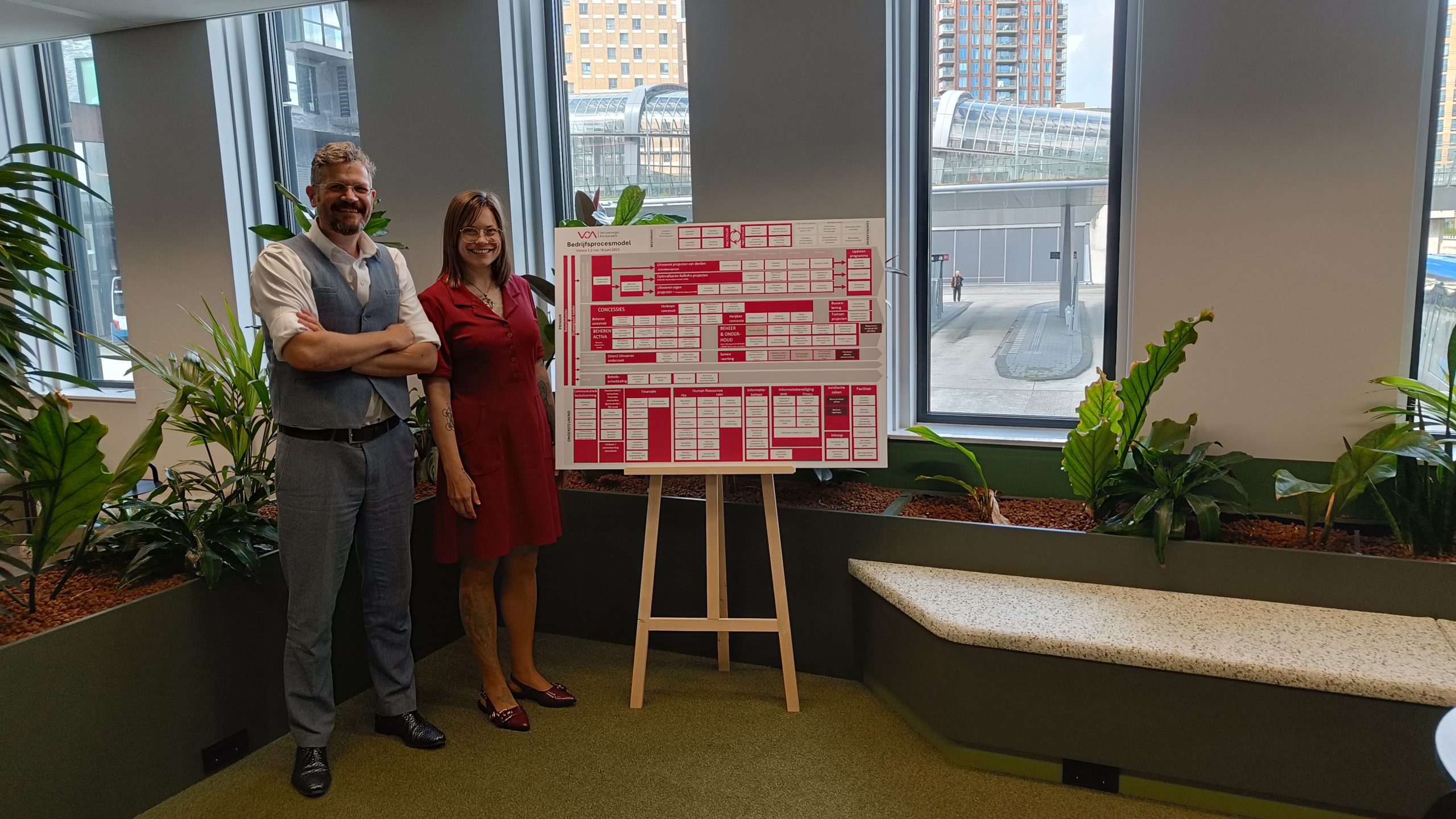
The three projects were brought together under governance, monitoring and accountability, leading to closer collaboration and greater coherence. A widely supported business process model was developed, making the relationships between processes visible. The supervision process was successfully implemented. However, the introduction of the permitting process proved more complex due to variations in mandates and process types. This integrated approach strengthened coherence, although permitting still requires additional attention to alignment and standardisation within the organisation.
The ambition to create a single, uniform permitting process turned out to be too great. In practice, three process variants existed, depending on the mandate. The attempt to combine these into one model led to tensions. In hindsight, the feasibility of standardisation had not been sufficiently taken into account. This experience highlights the importance of realistic and workable process designs that reflect day-to-day practice and take existing differences in ways of working and mandates into consideration.
Insight
The programme increased awareness of the importance of consistent process agreements. The process game with Lego helicopters demonstrated that effective process governance leads to better collaboration. At the same time, it became clear that the feasibility of supporting systems had been overestimated. Freedom in process design did not always align with what the systems could handle. For non-core processes, the approach has therefore shifted towards starting from the capabilities of the systems, rather than from an ideal design.
Digitalisation proved successful only where processes were well designed. Task‑oriented activities turned out to be harder to digitalise than process‑oriented ones. The introduction of supervisory processes went smoothly, thanks to committed staff and a department that was already familiar with process thinking. In the area of permit granting, however, a stalemate arose due to the combination of different process variants. This made it clear that greater alignment and insight into the entire process chain are needed to ensure that digitalisation is effective and sustainable.
Embedding
The implementation led to more discussion about process ownership. With the introduction of the Environment and Planning Act, more focused discussions are now being held with municipalities about the division of responsibilities. Employees who were involved in process design are actively participating in these discussions. This contributes to managing processes in terms of quality and lead times. Awareness of working together within a chain has increased and is strengthening the implementation.
The chosen approach is experienced as valuable. The process game made mutual dependencies visible and encouraged collaboration. Starting with the core processes delivered immediate results. An important lesson learned is the early identification of process owners. By assigning ownership clearly from the outset, clarity is created around frameworks and responsibilities. This provides a solid foundation for further process improvement and makes it easier to implement changes effectively within the organisation.