Consultancy

Background
The original protocol for area development within the Province of Gelderland dated back to 2008 and consisted of 30 pages of text. Employees indicated that they no longer used the document, although they still acted “in the spirit of it”. There was a growing need for guidance without imposing a rigid framework. The management therefore requested that the protocol be updated and made more accessible for practical use.
Marc van Hemmen, programme manager for Physical Projects Delivery, observed that area development is often complex due to the wide range of stakeholders involved, differing interests and sometimes conflicting objectives. This makes it difficult to maintain control over the process. The department therefore wanted to develop an approach that would bring together accumulated knowledge and experience, be recognisable to all employees, and at the same time allow sufficient flexibility for tailor-made solutions for each project and situation.
Process design
The project managers within the department began by visualising the area development process in a brown paper session, using post-it notes to map out the key steps. This was then validated more widely with all staff, which led to recognition and consensus. Together, they determined which outputs were needed at each stage and what these should look like. The result was a shared document that made collective knowledge tangible and kept the process clear and applicable for everyone.
Following the detailed development, the draft approach was once again shared widely within the team. During interactive sessions, an open dialogue took place about the chosen structure, content and practical application. This ensured that everyone could recognise themselves in the approach and felt committed to it. The final result is a broadly supported way of working that not only describes the process, but also captures the team’s shared knowledge and experience.
Results
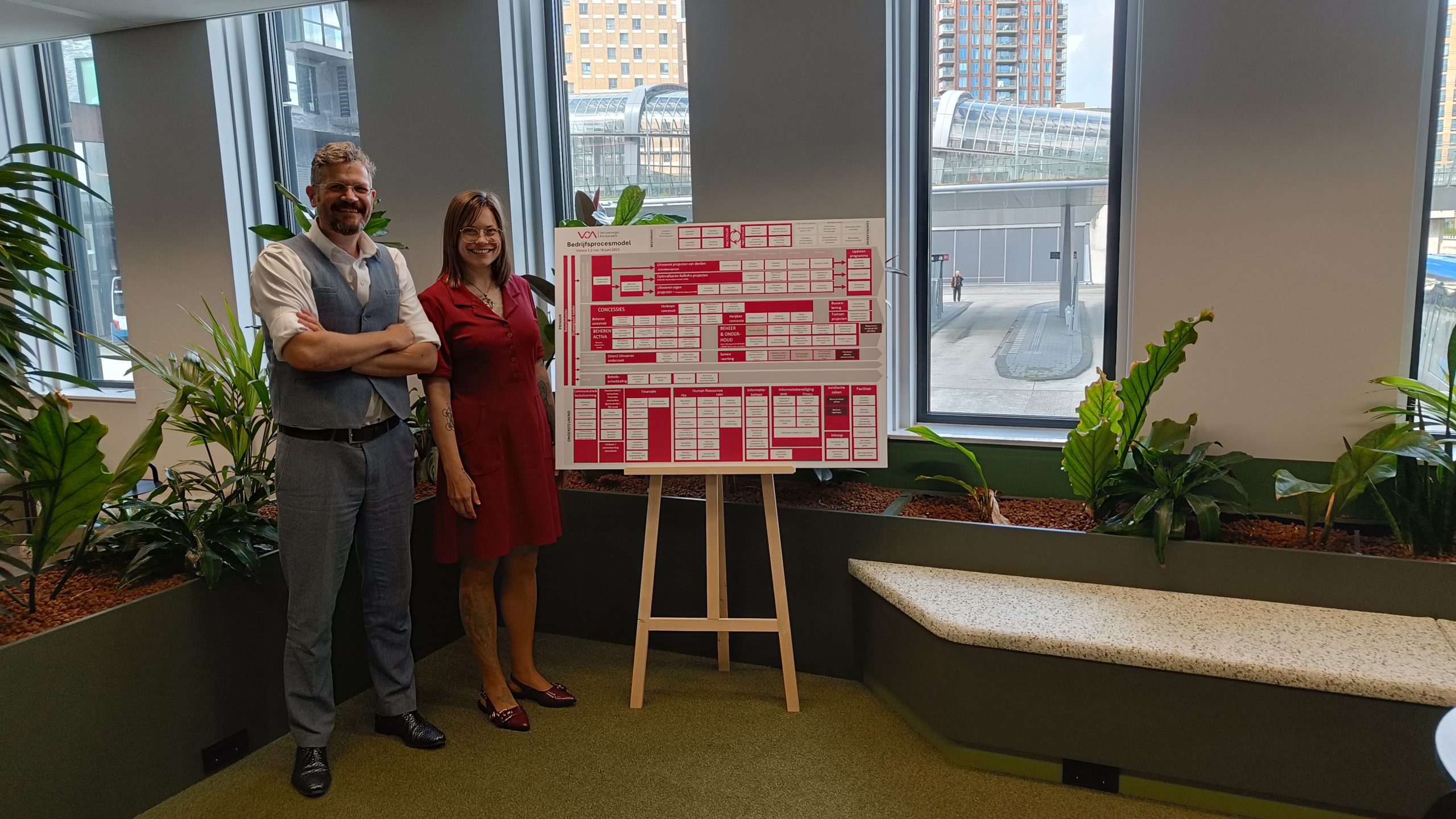
The updated approach consists of three formats: an A3 discussion sheet, a booklet, and a dynamic clickable document. The discussion sheet makes the complex process clear at a glance. The booklet provides an accessible explanation of UFO’s way of working. The clickable approach functions as a learning tool in which employees can add product descriptions, examples and tips. In this way, the approach remains up to date and encourages knowledge sharing within and beyond the team.
“It obliged us to get to the core together, resulting in an approach that belongs to all of us and is also understandable to outsiders.” The approach helps to establish clear agreements and structure the process. Annual evaluations and contributions from specialist teams keep the approach alive. New themes, such as stakeholder engagement, are added. This strengthens collaboration and supports well-informed decision-making in area development.
Collaboration
UFO aims to continue developing within the frameworks set by politics and policy, while also contributing to a liveable and future-proof Gelderland. The updated approach supports this by providing structure without being restrictive. By defining the process together, a shared framework is created that offers direction while leaving room for individual expertise, experience and tailored solutions for each project and situation.
Marc van Hemmen emphasises the importance of joint development within UFO. “The success lay in doing it together with all 45 professionals.” Reflecting collectively on the work and the process created engagement and ownership. People are keen to talk about their profession and share their experiences. This not only strengthens team cohesion, but also leads to sharper insights and an approach that is genuinely supported by the entire team.