Consultancy
 Van Belofte Tot Beleving De Onzichtbare Democratische Klantreis 2
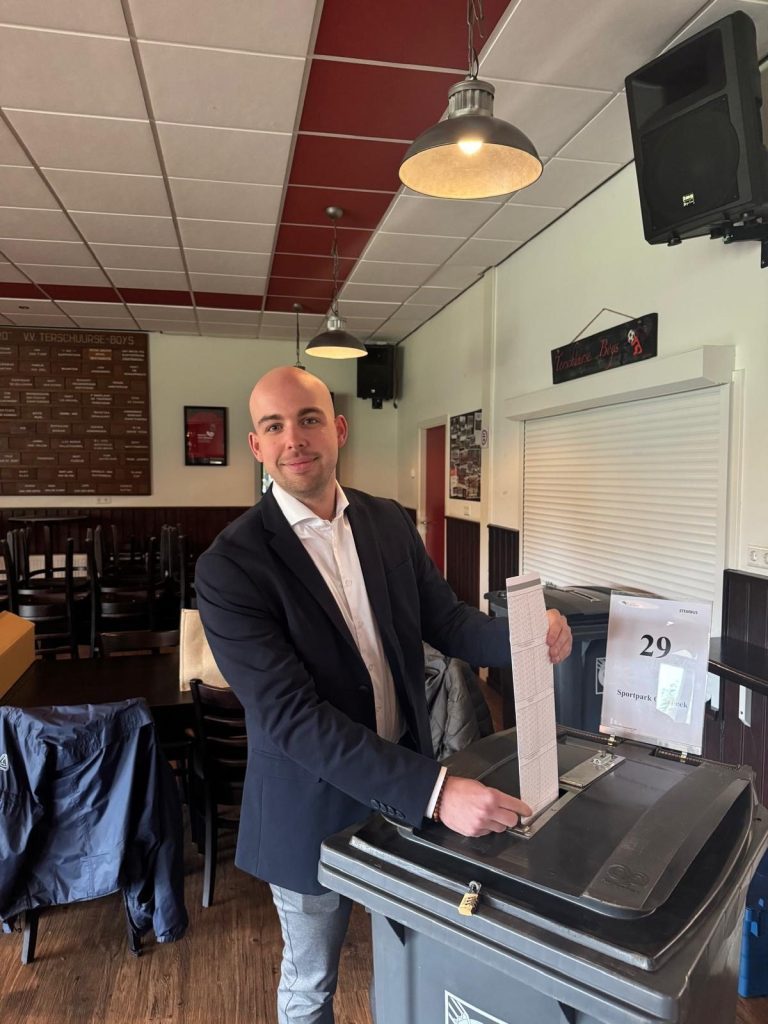
On 29 October 2025, the Dutch general election took place. During election periods, democracy holds up a mirror to us: politicians listen, make promises, and respond as if the citizen were a customer. Campaigns run at full speed and the citizen temporarily takes centre stage.
But once the votes are counted, attention shifts to internal processes and coalition negotiations. The citizen fades from view.
This pattern is familiar in many organisations: the customer journey is rarely followed in a structural way. Satisfaction is measured at the beginning or at the end of the process, but hardly ever in between. Yet it is precisely in these intermediate interactions that trust is built or lost.
We refer to this dynamic as the democratic customer journey: a temporary peak in attention around elections, followed by a long period of administrative distance. It shows how quickly the focus on the “customer” can shift once the pressure of the moment subsides.
Elections therefore act as a mirror for any organisation: how sustainable and consistent are our relationships with the people we serve? What does the democratic customer journey teach us about how we involve people when designing processes?
Where processes break down and trust is lost
The democratic customer journey shows the same fractures as many customer journeys within organisations: intense contact at the beginning and the end, but very little structure in between. The problem rarely lies in communication itself; organisations often communicate frequently and effectively. However, if the design and governance of processes fall short, the experience becomes fragmented and the customer loses trust.
Several public-sector cases illustrate what happens when processes are not properly designed or governed.
During the COVID-19 period, the system shifted at great speed: measures, support packages and press conferences followed one another in quick succession. But as rules changed and predictability declined, people lost their sense of overview. It was not the intention that failed, but the process design. The customer journey became a series of disconnected incidents, as if sprints were being run without an overarching structure or long term vision.
The childcare benefits scandal presents the opposite picture: parents followed procedures correctly, yet were wrongly labelled as fraudsters. The system promised legal certainty, but delivered a structural lack of fairness. The customer journey lost its consistency, human dimension and transparency, and trust collapsed.
A similar pattern can be seen in Groningen, in the handling of earthquake damage. The human dimension is lacking, and government too often starts from a position of distrust rather than trust. Yet trust is a fundamental condition for any customer journey, whether in politics, in public services, or in the design of people centred processes.
Trust is lost when processes are not predictable, coherent or human centred. Five underlying causes stand out:
1. Incomplete process design
Processes are often designed around internal efficiency rather than the customer experience. This leads to gaps between expectation and experience.
2. A poorly managed customer journey
Customer journey mapping often remains limited to a visualisation. Without a clear link to process governance, little changes in practice.
3. No action on feedback
Feedback is collected, but not acted upon. Insights are archived and rarely lead to structural improvements.
4. Pitfalls in execution
Siloed working between departments, an overreliance on technical solutions, and a lack of alignment between people, systems and processes lead to fragmentation.
5. No complete cycle of promise, experience and evaluation
Organisations often overlook the fact that trust is built through a continuous cycle of listening, delivering and learning. Elections illustrate this clearly: a peak in attention every four years, followed by years of silence. A shorter, continuous feedback cycle is needed to build trust in a sustainable way.
Only those who respect and accelerate this cycle can truly build trust. Continuously measuring, learning and adjusting reduces the gap between intention and experience, and makes processes more agile, people-focused and reliable.
In political The Hague, trust has become a widely discussed topic. But trust is not an abstract value or merely a relational intention; it is the outcome of well-designed processes. Trust only emerges and endures when interactions are predictable, policy and execution are aligned, and the human dimension is structurally embedded.
In the public sector, the customer relationship is often shaped by political cycles such as elections, changes of government and policy shifts. Yet similar cycles exist in commercial and non-profit organisations, including quarterly targets, campaigns and reorganisations, which temporarily shift attention towards the customer. The democratic customer journey shows that trust is not built in peak moments, but in the continuity between them. Elections are snapshots within an ongoing relationship between citizen and government, just as a purchase, grant application or care pathway is in other sectors.
Efficiency and legitimacy do not follow from words, but from process quality. Trust is not a by-product of empathy; it is the result of consistent, well-designed customer journeys.
A cyclical approach to customer-focused, reliable organisations
Trust is often broken by flawed processes, but it can also be built, not through isolated actions, but through a coherent and consistent approach. What if elections, crises or transformation programmes were not treated as stand-alone moments, but as part of one continuous system of listening, delivering and learning? This creates a customer journey that does not merely respond to incidents, but improves structurally based on predictable interactions. That is precisely the essence of a reliable organisation: trust does not arise from intention, but from a stable rhythm. Not from empathy alone, but from the quality of processes.
The INK management model provides a framework for linking sustainable performance to an organisation’s capacity to learn. Excellent performance emerges from the coherence between three components:
- Providing direction: leadership, strategy, people, resources and processes guide the organisation.
- Delivering results: appreciation from customers, employees and society demonstrates what the organisation actually achieves.
- Improving and innovating: the organisation learns from results, uses feedback and adapts its approach in order to continuously improve.
When the customer journey is embedded within this system, a healthy balance emerges between a people-focused approach and the strength of structured processes. The rhythm of improvement is then no longer driven by external pressure such as elections, commercial deadlines or project schedules, but by the organisation’s own internal process cycle.
By continuously listening, delivering and learning, a more stable and reliable improvement mechanism takes shape. The organisation does not merely respond to peak moments, but develops its own rhythm of reflection and adjustment, based on the customer journey and process data.
Those who fully leverage the customer journey connect it directly to process governance. Three anchors are crucial in this regard:
- Architecture: the customer journey as a mirror of processes, bringing policy, execution and experience side by side to identify where breakdowns occur.
- Measurement: experience as a performance indicator linked to time, quality and cost, providing an integrated view.
- Steering: insights embedded in governance; PDCA becomes an instrument for both legitimacy and efficiency.
Deze aanpak sluit direct aan op het INK-model: richting geven, resultaten realiseren en verbeteren & vernieuwen. Zo groeit customer journey mapping uit tot een volwaardig stuurinstrument dat de menselijke maat niet incidenteel toepast, maar structureel verankert in het hart van de organisatie. .
From insight to execution
This approach aligns directly with the INK model: providing direction, delivering results, and improving and innovating. In this way, customer journey mapping evolves into a fully-fledged steering instrument that does not apply the human dimension incidentally, but embeds it structurally at the heart of the organisation.
- Organising processes based on trust
Start from the principle that customers and citizens are willing to cooperate. Mitigate risks without making distrust the starting point, for example through transparent procedures and clear communication. - Designing the desired customer journey in a structured way
Think in advance about the ideal experience and design processes that make this experience possible. Use customer insights and journey mapping to define and validate the desired route. - Maintaining an ongoing dialogue with customers
Gather interim feedback through customer panels, interviews or digital channels. Adjust processes based on current insights, so that improvement does not depend on incidents or end-of-journey measurements. - Embedding improvements structurally
Ensure that lessons learned are not treated as one-off events, but are embedded in the process architecture, governance and control mechanisms. This includes integrating feedback loops into PDCA cycles and assigning clear process ownership.
For both public and private organisations, it is not the customer journey itself, but the design of and guidance on the desired customer journey that forms the blueprint for trust. Trust comes on foot but leaves on horseback: it is built slowly through consistent processes and quickly lost through poor execution. Those who take process management seriously make the human dimension not an exception, but a principle of the system. Trust is not created through words, but through what follows. Take a look in the mirror: how much trust do your customers have in you?